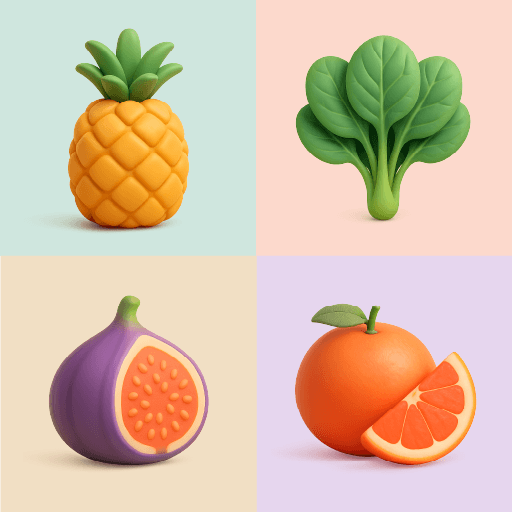
How to eat more vegetables every day, one taste at a time
One taste instead of a serving, variety instead of volume, and a count you can see. The two-minute version of every meal.
To eat more vegetables every day, stop trying to eat more vegetables and start tasting one. One taste of one plant you do not usually eat, next to whatever is already on the plate, counted. It takes under a minute, it needs no recipe, and done daily it widens the plate faster than any resolution to cook differently. This article is part of the guide to healthy eating habits that stick; here we take the four meals of the day and give each one its two-minute version. Nobody has ever kept a vegetable habit that began with a salad spinner.
One taste, not a serving
"More vegetables" fails as a goal because it is a quantity, and quantities need planning, shopping and cooking. A taste needs none of those. A spoon of beans in the soup, three leaves of something green on the sandwich, a handful of frozen peas in the pasta, a herb on the eggs. Each is a complete success and each takes less time than reading about it.
The taste is also the unit that works for habit building. Small actions tied to a daily moment become automatic; large ones get skipped on the first tired evening and the skip becomes the pattern. Start with the taste and let the serving come on its own, which it does, because the plants you taste often are the plants you start to like.
Different beats more
The second change is to count different plants rather than amounts. In the American Gut Project, adults who ate more than 30 different plant types a week had a more diverse gut microbiome than those who ate 10 or fewer, an observation in adults and not a promise (McDonald, 2018). The guideline that follows is 30 different plants a week, each counted once, with vegetables, fruit, whole grains, beans, nuts, seeds, herbs and spices all on the list.
That changes what a good week looks like. Three kinds of apple is one plant. An apple, a pear and a handful of walnuts are three. The spice rack, the freezer and the tin cupboard are suddenly full of plants you have not counted yet.
The two-minute version of each meal
- Breakfast: one piece of fruit on the table next to the coffee, or a spoon of seeds on whatever is in the bowl.
- Lunch: one thing green from the fridge or a jar on the side of what you were having anyway.
- The afternoon: a handful of nuts, a different bag than last week.
- Dinner: one plant that was not in the recipe. Frozen peas in the pasta, a tin of beans in the sauce, a herb you usually skip.
- Any meal: one spice you own and never use.
None of these changes the meal. Each one adds a plant to it, which is the whole point.
Frozen, tinned, dried and herbs count
The plant that is in the house on a Tuesday beats the one that would have been better on a Saturday. Frozen peas and spinach, tinned chickpeas and tomatoes, dried lentils, jarred artichokes and olives are the same plants as the fresh versions and they wait for you. A freezer drawer with three bags of vegetables is a habit that survives a bad week.
Herbs and spices are the cheapest new plants there are. Parsley, cumin, garlic, ginger, oregano, black pepper: each one counts, each one takes seconds, and most kitchens own ten of them and use three. Which plants to bring home, and how to shop so the house is full of them, is in healthy grocery shopping habits.
Make the count visible
A taste that nobody counts is a taste that nobody repeats. The reward for eating well arrives years late, so the habit needs a reward that arrives tonight: a tick, a line on a chart, a card for the plant. After the last meal of the day, look at the table and mark what was tasted. That is the whole ritual, and it takes less time than the tasting did.
The count also fixes the week. A day with one taste is a day, a week with 20 different plants is a week, and both are visible without anyone judging them. What to do when a day has no taste at all is in never miss twice: the next meal, not Monday.
At a table with children
The method is the same and the unit is still the taste, with one difference: with children the taste is the whole game. In a home trial, two weeks of one small daily taste of a disliked vegetable was enough for most children aged 2 to 6 to start liking it (Wardle, 2003). Most need 8 to 15 tastes, a lick counts, and the card or the tick is for them while the tap is yours. That side has its own guide, how to get kids to eat vegetables, without the battle.
What backfires
- A vegetable dish as the goal. It needs a recipe, so it waits for a Sunday that does not come.
- Counting portions or grams. Counting takes effort; a taste takes none.
- Buying ten new vegetables at once. Nine rot and the lesson is the wrong one.
- Hiding the plant from yourself. You only learn to like what you can taste.
- "I was bad today". A day is a day with a taste or a day without, and the next meal is in a few hours.
How Project Food does this
Project Food is an app on your phone, for you alone or for everyone at your table. After the last meal it asks what you tasted, and you tap the plants from a list of over 200, with an "in season" filter for this month. Every new plant becomes a card and every taste counts towards it, the week counts towards 30 different plants, and the stats page shows your mix by category so the thin ones are easy to see. It never tells you what you did not eat.
Worth remembering
- One taste, not a serving. Next to what you were eating anyway.
- Different beats more: 30 different plants a week, each counted once.
- Every meal has a two-minute version. Pick one.
- Frozen, tinned, dried, herbs and spices all count.
- Count the taste tonight, or it will not happen tomorrow.
- With children the taste is the game; the parent guide has the rest.
Frequently asked questions
What is the easiest way to eat more vegetables?
Add one taste of one plant to a meal you already eat, instead of planning a vegetable dish. A handful of frozen peas in the pasta, a spoon of beans in the soup, a herb on the eggs. One taste a day, counted, widens the plate faster than a weekly resolution to cook differently.
Do frozen and tinned vegetables count?
Yes. Frozen peas, tinned chickpeas, jarred artichokes and dried lentils are the same plants as the fresh ones and far easier to keep in the house. For a habit, the vegetable that is in the freezer on a Tuesday beats the one that would have been better on a Saturday.
Do herbs and spices count as plants?
Yes, each one is a plant in its own right. Parsley, cumin, garlic, ginger, oregano and black pepper all count towards variety, which makes the spice rack the cheapest place to find new plants. One you usually skip, on a dish you already make, is a new plant in under a minute.
How many vegetables a day do I need?
This guide does not count portions. The adult guideline it works from is about variety across the week: 30 different plants, counting vegetables, fruit, whole grains, beans, nuts, seeds, herbs and spices, each once. One taste a day of something different gets you most of the way there.
What about at a table with children?
The same method, with the taste as the unit. Most children need 8 to 15 tastes of a new food before they accept it, a lick counts, and the card or the tick is for them while the tap is yours. The parent guide on this site covers that side without the battle.
Sources & citations
- McDonald D et al. (2018). American Gut: an open platform for citizen science microbiome research. 10.1128/mSystems.00031-18
- Wardle J, Cooke LJ, Gibson EL, Sapochnik M, Sheiham A, Lawson M (2003). Increasing children's acceptance of vegetables; a randomized trial of parent-led exposure. 10.1016/S0195-6663(02)00135-6