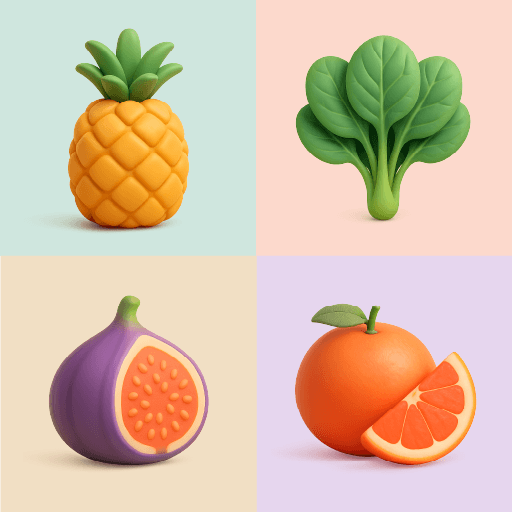
How to build healthy eating habits that stick
Not a diet and not willpower: one small action, the same moment every day, a reward you can see, and about 10 weeks of patience.
Healthy eating habits stick when they stop depending on you. A habit is a loop: a cue, a want, a small action and a reward you notice. Most attempts to eat better skip three of the four and lean on willpower for the rest, which is why they last about as long as a new year. This page walks the loop step by step, with the honest timeline, the mistakes that undo it, and the one-minute version you can start tonight. The vegetables, it turns out, were never the hard part.
Start with the loop, not the diet
Every habit you already have runs the same way. Something prompts it, you want the result, you do the thing, and the result rewards you enough to do it again. Brushing your teeth has a cue (bedtime), a want (a clean mouth), an action that takes 2 minutes and a reward you feel at once. Eating differently usually has none of these in place: no fixed moment, a want that is vague, an action that means cooking something new, and a reward that arrives months later, if you notice it at all.
James Clear's Atomic Habits turns the loop into four rules: make it obvious, make it attractive, make it easy, make it satisfying. They are a useful checklist for food because food fails on all four at once. The sections below take them one at a time.
Make it obvious: one cue, the same moment every day
A habit needs a moment that already exists. Not "eat more vegetables", which can happen at any time and therefore happens at none, but "after the last meal of the day, I do this one thing". The last meal is the best anchor most people have: it happens daily, at roughly the same time, and it is the moment you can still remember what you ate.
The formula is "after I do X, I will do Y", with X something you never skip. Breakfast coffee, the walk home, sitting down for dinner, clearing the table. Which anchor you choose matters less than that it is daily. The article on habit stacking for healthy eating goes through the stacks that hold and the ones that quietly fail.
Make it attractive: a reward you can see today
Eating well is preventive. The outcome you are doing it for does not show up in the mirror next week, and most people quit in the gap between effort and result. The fix is not more motivation; it is a reward that arrives the same day. A tick, a count, a card for the plant you tasted. Something that goes up and never resets.
That is also why restriction fails so reliably. Taking foods away gives you a daily loss and a distant gain. Adding one plant a day gives you a daily gain. The mechanics of why it feels so hard, and what to change instead, are in how to stick to healthy eating, when diets never did.
Make it easy: one taste, under a minute
The version of the habit you start with has to be small enough to do on a bad day. Not a new recipe, not a meal plan, not a shopping overhaul. One taste of one plant you do not usually eat, next to whatever you were eating anyway. A spoon of beans in the soup, a handful of frozen peas, a herb on the eggs.
The rule of thumb from the habit literature is 2 minutes: scale the action down until it fits in that window, and only grow it once it is automatic. One taste fits. The article on how to eat more vegetables every day gives the two-minute version of each meal, and why variety beats volume.
Make it satisfying: track it, never miss twice
What gets rewarded gets repeated, and the reward has to be immediate. A tracker is the cheapest immediate reward there is: the day you did it gets a mark, the marks line up, and after a week the line itself is something you do not want to break.
Two rules keep a tracker honest. First, it counts what you did, never what you did not. Second, missing once is an accident and missing twice is the start of a new habit, so the only rule that matters on a bad day is to get back at the next meal. Never miss twice explains why the second day is the one that counts, and why a reset to zero is the wrong design.
The honest timeline: about 10 weeks
In the one study that measured it, 96 adults each chose a daily eating, drinking or activity habit tied to a cue, and their sense that it had become automatic took 66 days on average to level off, with a range of 18 to 254 days (Lally, 2010). The advice doctors are given is the same: one small action, the same moment every day, and about 10 weeks of patience (Gardner, 2012). The 21 days you have read about comes from nowhere in particular.
Food habits sit at the long end of that range, because a meal has more moving parts than a glass of water. Ten weeks sounds long until you compare it with the number of Januaries you have already spent. How long it takes to form a healthy eating habit looks at the study and at what to count as a day.
The shelf decides the week
The easiest way to resist something is never to meet it, and your kitchen is set on the day you shop. What is in the house on Saturday is what gets eaten by Friday. That makes the supermarket the one place where you control the cues for the other six days, without any willpower at the table.
Shop by category rather than by recipe, buy what is in season because it is the cheap kind of variety, and put one plant in the basket that you have not eaten this month. The list is in healthy grocery shopping habits.
How to change eating habits you already have
Breaking a habit follows the same loop in reverse: remove the cue, make the action hard, take away the reward. The crisps at 22:00 have a cue (the sofa, the screen), an easy action (the bag is in the cupboard) and a quick reward. You do not win that fight at 22:00. You win it on shopping day, by not bringing the bag home, and on the sofa, by having something else within reach that you also like.
Two rules make it workable. Replace rather than remove: the loop wants an action at that cue, so give it one, a bowl of something you bought on purpose. And change one habit at a time, the same way you build one, because attention is the scarce thing.
What backfires
- Changing everything at once. Five new habits compete for the same attention and all of them slip.
- Restriction. Cutting foods out makes them louder; adding foods in makes the plate wider.
- Willpower as the plan. Willpower is a short-term tool that runs out by 19:00, which is when dinner happens.
- Starting on Monday. The habit lives in the next meal, not in the calendar.
- A tracker that resets to zero. A miss then costs everything, and the rational move is to stop.
- Counting portions, calories or grams. Counting takes effort; a taste takes none.
- Judging the day. "I was bad today" is a sentence about you, not about the beans.
At a table with children
The loop is the same, but the reward changes hands. With children, the taste is what counts: most need 8 to 15 tastes of a new food before they accept it, a lick counts, and the card or the tick is for them while the tap is yours. That side has its own guide, how to get kids to eat vegetables, without the battle, and nothing on this page changes it.
When eating feels like a fight with yourself
Habits are for the ordinary case. If eating has become a source of fear, secrecy or distress, if you are losing weight you did not intend to lose, or if a day of eating ends in guilt more often than not, talk to your doctor. That is not a habit problem and no tracker is the answer to it.
One vote at a time
Each time you taste something new, you cast a small vote for the kind of person who tastes things. Nobody becomes that person in a week, and nobody needs to. The identity follows the count, and the count follows one taste a day.
How Project Food does this
Project Food is an app on your phone, for you alone or for everyone at your table. After the last meal of the day it asks one question, what did you taste today, and you tap the plants. Every new plant becomes a card and every taste counts towards it. The week counts towards 30 different plants, the adult guideline from the American Gut Project (McDonald, 2018), and the streak counts days with at least one plant logged, with a free pass for a missed day. Nothing in it tells you what you did not eat.
Worth remembering
- A habit is a loop: cue, want, action, reward. Food fails on all four unless you set them.
- One cue, the same moment every day. The last meal is the best anchor most people have.
- One taste, under a minute. Grow it only once it runs on its own.
- A reward you can see today, that goes up and never resets.
- About 10 weeks, not 21 days. Plan for a season.
- Missing once is an accident. Get back at the next meal.
- The shelf decides the week: shop by category, in season, one new plant.
Frequently asked questions
What is the easiest healthy eating habit to start with?
One taste of a plant you do not usually eat, once a day, at the meal you already keep. It takes under a minute, needs no recipe and no shopping change, and it gives you something to count. Add a second habit only when the first one no longer needs reminding.
How long does it take before healthy eating feels normal?
In the one study that measured it, a new daily habit took about 10 weeks to feel automatic, 66 days on average, with a range of 18 to 254 days. Eating habits sit at the long end because a meal has more moving parts than a glass of water. Plan for a season, not for three weeks.
Is it better to change one eating habit at a time?
Yes. One action tied to one daily moment becomes automatic; five actions tied to good intentions compete for the same attention and all of them slip. Pick the one that happens every day, keep it until it runs on its own, then stack the next one on it.
What if I have a bad day?
One bad day changes nothing, in the data and in practice. The habit breaks when a missed day becomes two, because the second miss starts a new habit of not doing it. Get back at the next meal, not on Monday, and leave the guilt out of it.
Do these habits work for a family, or only for one person?
Both. The loop is the same whether you count for yourself or for everyone at your table. With children the reward changes hands, the card is for them and the tap is yours, and the tasting numbers for children apply. The parent articles on this site cover that side.
Sources & citations
- Lally P, van Jaarsveld CHM, Potts HWW, Wardle J (2010). How are habits formed: modelling habit formation in the real world. 10.1002/ejsp.674
- Gardner B, Lally P, Wardle J (2012). Making health habitual: the psychology of 'habit-formation' and general practice. 10.3399/bjgp12X659466
- McDonald D et al. (2018). American Gut: an open platform for citizen science microbiome research. 10.1128/mSystems.00031-18
Related articles
How long does it take to form a healthy eating habit?
6 min read
How to stick to healthy eating, when diets never did
6 min read
Habit stacking for healthy eating: the one stack that holds
5 min read
Healthy grocery shopping habits: the shelf decides the week
5 min read
Never miss twice: what to do after a bad eating day
5 min read
How to eat more vegetables every day, one taste at a time
5 min read