Why 30 Different Plants Per Week?
The science behind the number that changed how we think about food.
6 min read
Where does the number come from?
The 30-plant target comes from the American Gut Project — one of the largest citizen science studies on the human microbiome. Researchers analysed gut bacteria samples from thousands of participants and found a striking pattern: people who ate 30 or more different plant foods per week had significantly more diverse gut microbiomes than those who ate 10 or fewer.
Microbiome diversity matters because different species of gut bacteria have different jobs. Some break down specific fibres, others produce short-chain fatty acids (SCFAs) that protect the gut lining, and others synthesise vitamins or influence immune function. A narrow diet feeds a narrow microbiome — and a narrow microbiome is consistently linked to worse health outcomes.
Why variety, not just quantity?
Here's the key insight that surprises most people: eating a lot of vegetables is not the same as eating many different vegetables. If you eat broccoli every day, you are feeding the bacteria that thrive on the specific fibres and polyphenols in broccoli — and starving the ones that would benefit from, say, lentils or walnuts.
Every plant contains a slightly different mix of fibres, polyphenols, and phytochemicals. A diverse plant diet is like broadcasting on many frequencies at once — you feed a much broader range of the microbial ecosystem in your gut.
What counts as a plant?
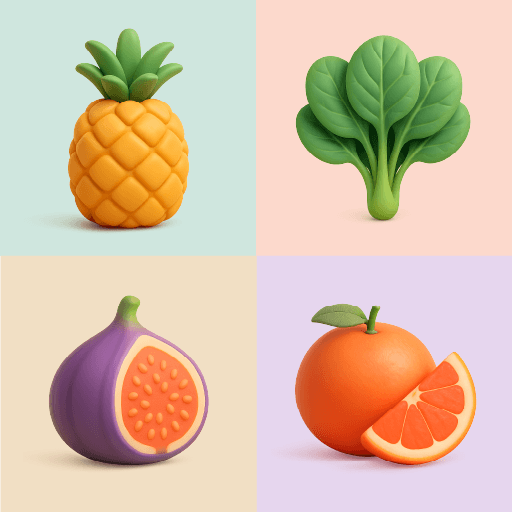
This is where it gets fun. The 30-plant target includes fruits, vegetables, legumes, whole grains, nuts, seeds, herbs, and spices. Yes — herbs and spices count. A pinch of cumin in your rice, a handful of fresh basil on your pasta, a slice of ginger in your tea: they all count as separate plants.
Is 30 a hard target?
No. It's a useful target, not a clinical threshold. The research shows a gradient: more plant diversity correlates with better microbiome diversity, but there is no cliff edge at 29 or a magic transformation at 30. Think of it as a direction, not a finish line. The app helps you keep score — and keeping score is itself most of the benefit.
Sources & citations
- McDonald et al. (2018). American Gut: an Open Platform for Citizen Science Microbiome Research. 10.1128/mSystems.00031-18
- Wastyk et al. (2021). Gut-microbiota-targeted diets modulate human immune status. 10.1016/j.cell.2021.06.019
- Zmora et al. (2019). You Are What You Eat: Diet, Health and the Gut Microbiota. 10.1038/s41575-018-0061-2